Choosing the Right Water Storage Tank For You
The range of water tanks available on the market can make choosing one feel like a daunting task. There are a number of factors that should be taken into consideration so we will present them here and assist you in deciding on the right tank for your needs.
Establish Your Rainwater Harvesting Requirements
The amount of water you would like to collect as well as the size of your roof will impact upon the size of tank that you should choose.
A rough calculation is that 1mm of rainfall collected on 1m2 of roof space will result in 1 litre of rainwater collected in your storage tank.
The size of the average residential property roof is 200m2 which would mean that 500mm of annual rainfall would equate to 100,000 litres of harvested water.
What you will need to do is collect data on how much rainfall your region typically receives each year and then in conjunction with your available roof surface area, size your tank on that basis.
Choose Your Accessories
When looking for a water tank you should consider exactly how you intend to use it to provide water to your land or property. There are several accessories which can make the collecting and filtering of water much easier.
- The fitting of mesh filters to gutter inlets to prevent blockages from debris
- The installation of a tank screen to prevent debris and unwanted material entering your tank
- The ability to plumb your tank directly to your washing machine or bathroom toilet
- The installation of a pump and filtering system to pump collected water to the areas you need it
Decide on Installation Location
Your next step is to decide on where you would like your water tank to be installed.
The ideal location is as close to the point where water is collected. This means being located near a guttering downpipe.
You do need to make sure that the tank’s location doesn’t cause an obstruction and allows you to access your property as you require.
Choose Your Style of Tank
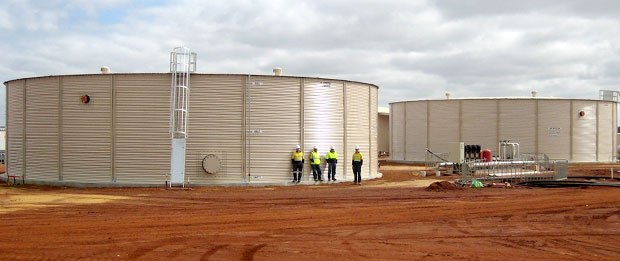
Each water storage tank is typically cylindrical and built from a corrugated steel sheeting system. The better tanks also feature layers of insulation which help protect it from the environment and wildfires.
A variety of colours will be available so choose one that best matches your property and location.
Site Preparation
Once your tank has been ordered, you will likely need to prepare the area where it is going to be laid.
Each tank will need its own foundation and depending on size this could be anything from a bed of sand or a concrete ring beam for larger installations. Your supplier will usually be able to advise based on the tank you have chosen.
There are many suppliers across Australia so you’re sure to be able to find a suitable solution. In Melbourne water tanks are common. Contact several suppliers and arrange for a quotation which may include a brief site survey.
The installation of a water tank is sure to revolutionise the way in which you use water around your home.